Pamplona/Cizur Menor (Day 5 on the Camino)

Today we traversed the beautiful city of Pamplona, probably most famous for the Sanfermines festival, or the Running of the Bulls. Ernest Hemingway made this festival famous in his book, “The Sun Also Rises.” The festival originated in the 13th century and some legends suggest that St. Fermin himself was martyred by being dragged by bulls through the streets. Thankfully, today the streets were quiet for us when we passed through since the bulls only run during the festival – July 6-14.

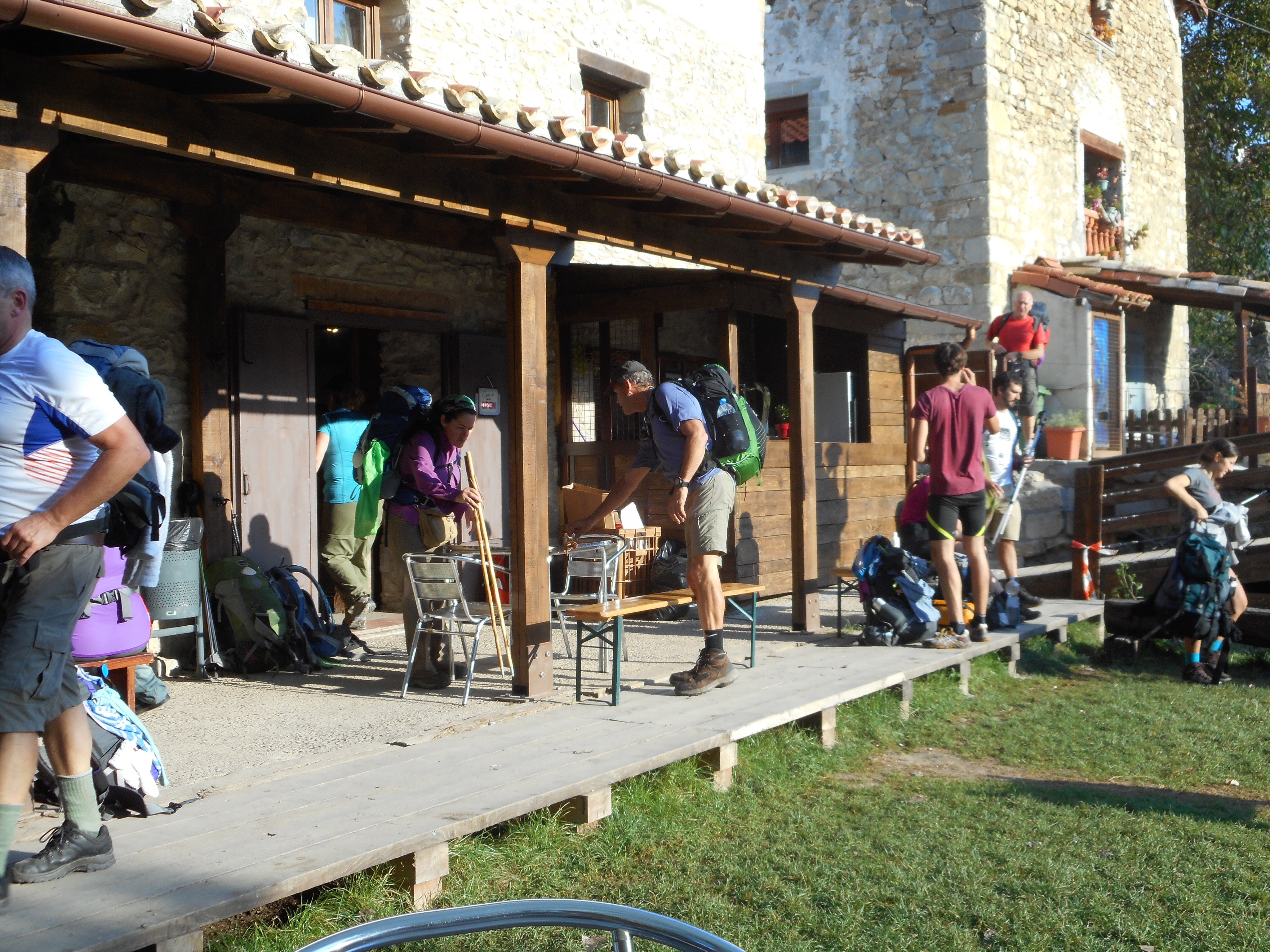
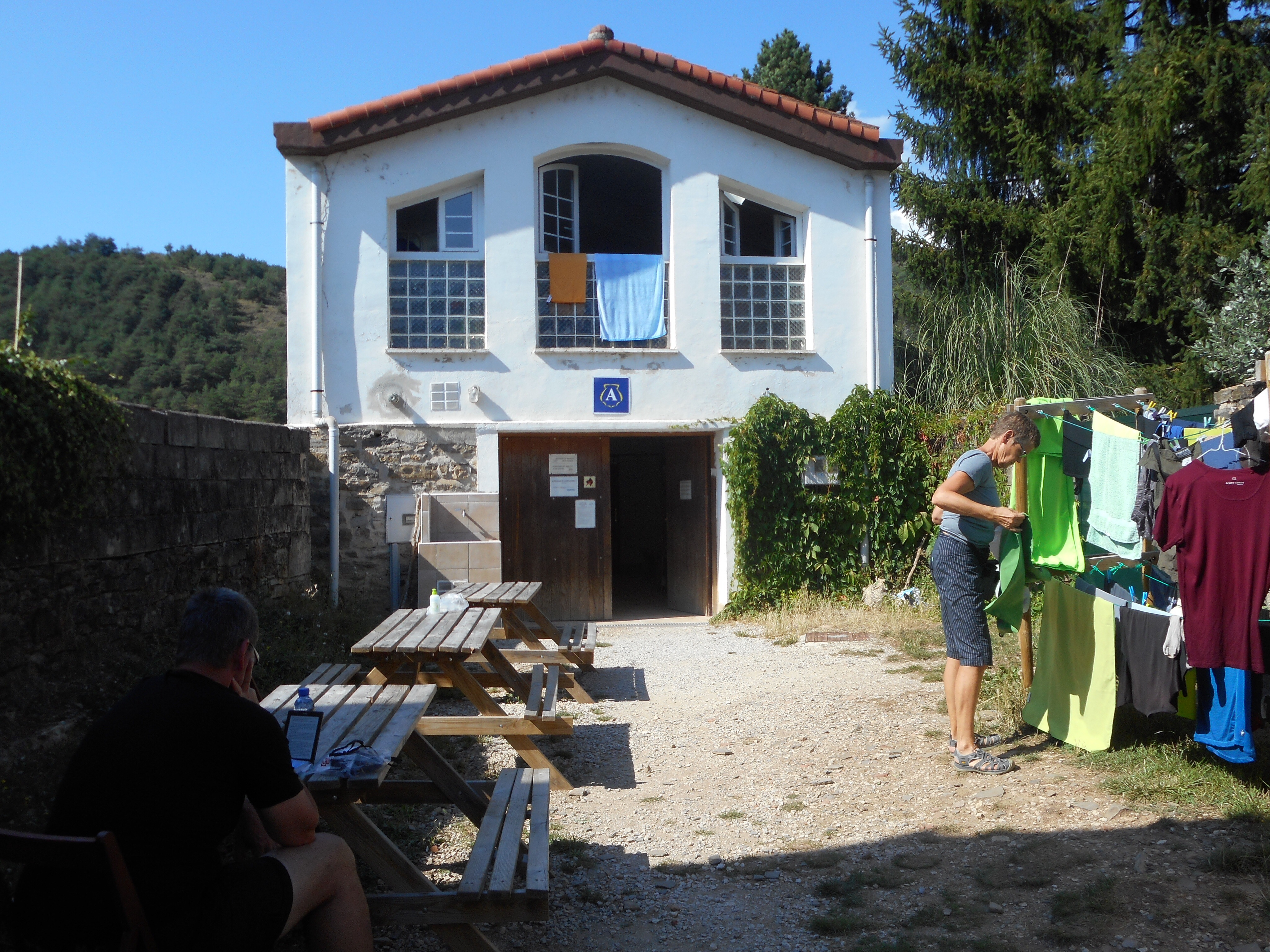
We saw relatively few pilgrims today – surprising based on how many we have seen over the past few days. We got a fairly early start and just took it easy for most of the day, arriving at our destination of Cizur Menor – a dormitory town serving the nearby University of Navarre, located about 2 miles outside the city – a little past noon. We had a half-day of rest scheduled for this town which is why we stopped so early.

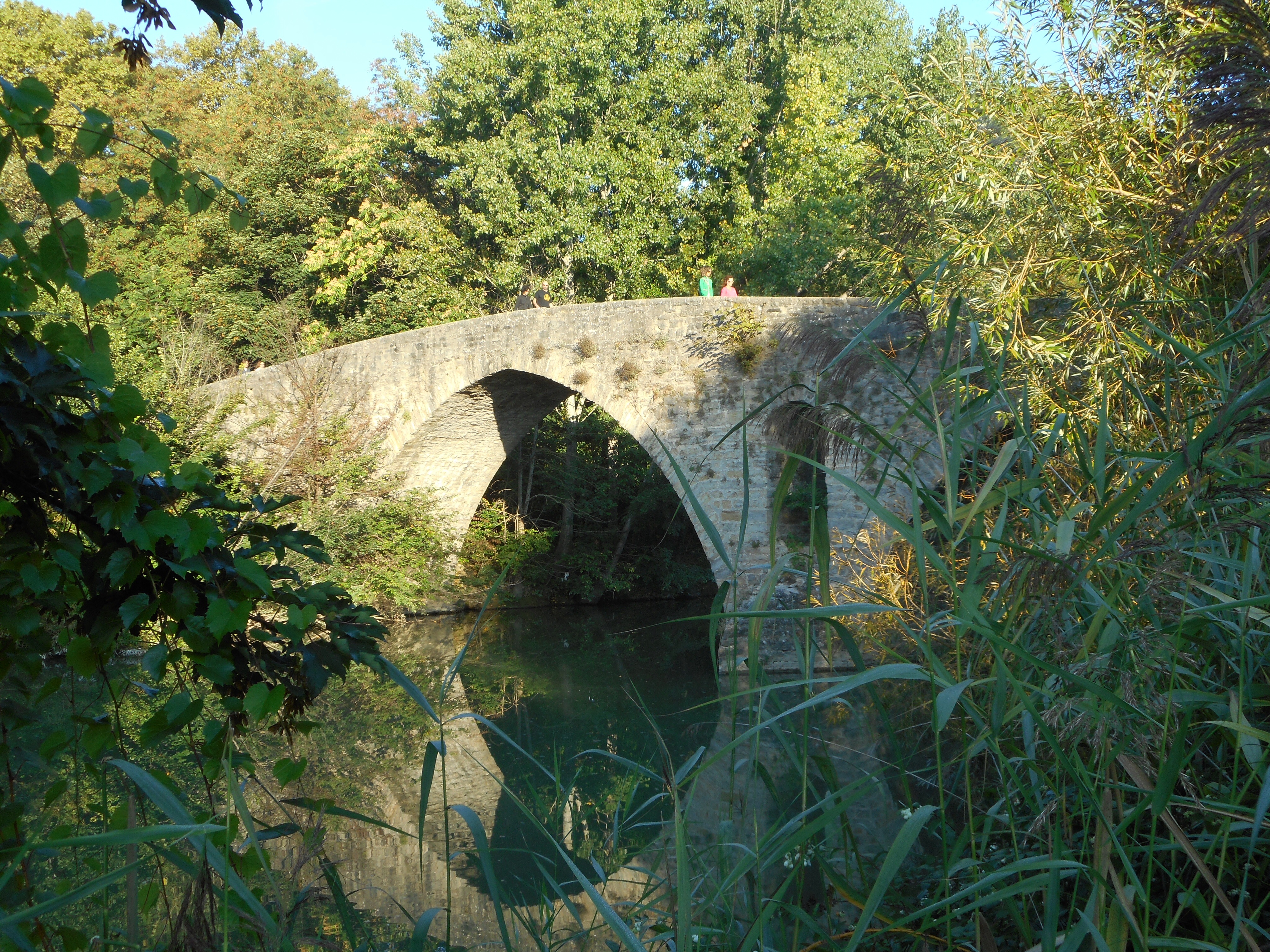
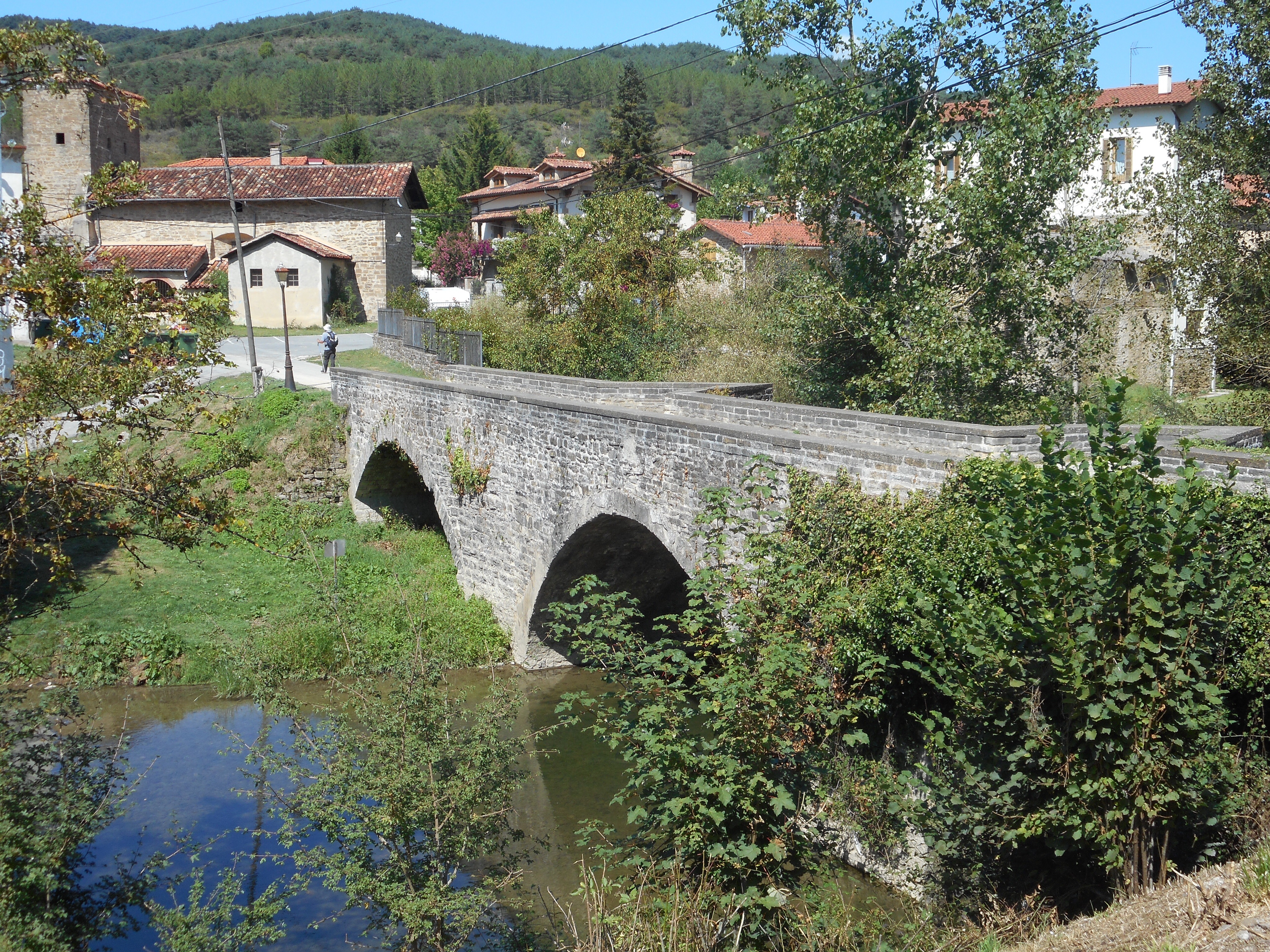
Puente de la Magdelena

Puente de la Magdelena

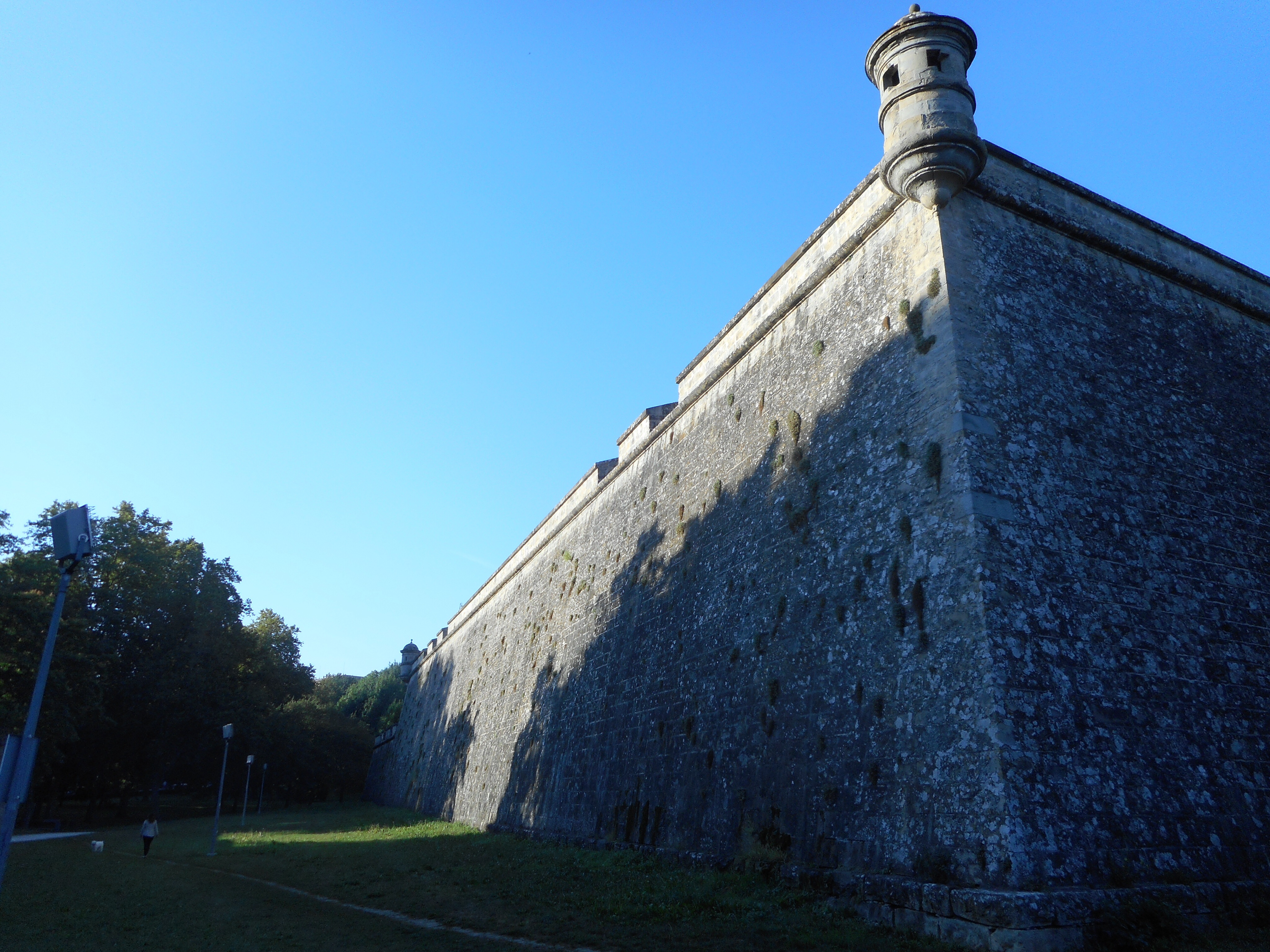
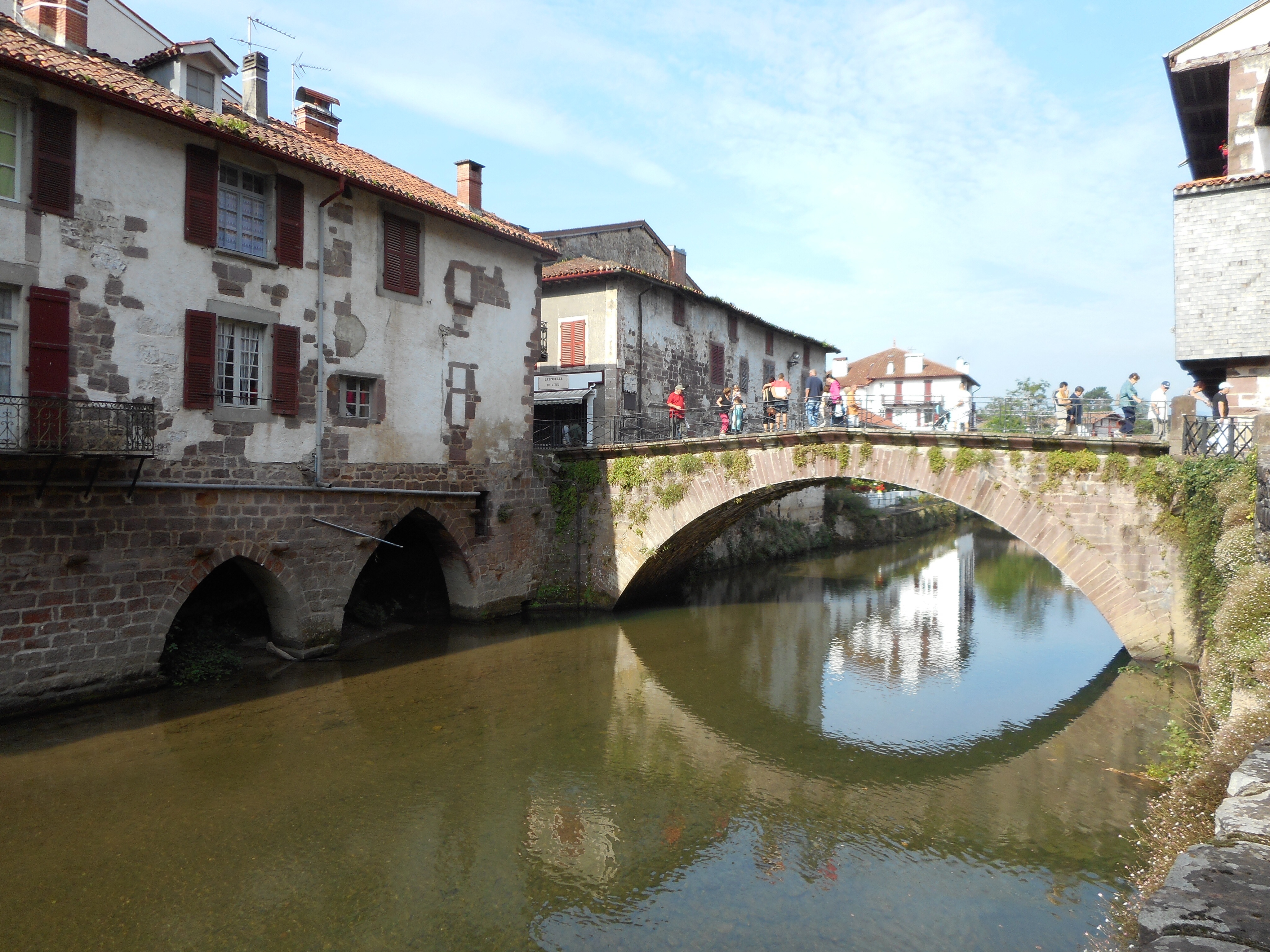
We began to see signs of the suburbs almost immediately after leaving Arre. The wooded, rural landscape was quickly replaced with signs of urban sprawl. After an hour or two we entered Pamplona’s old, historic city center, crossing the Arga river on the Puenta de la Magdalena, a 12th century bridge that is a traditional symbol of the Camino. Moving further into the city through the city wall with its towering ramparts we entered the narrow streets where the bulls run. We stopped at the Cathedral, an austere Gothic structure, but unfortunately it was not yet open for the day so we moved on.

image
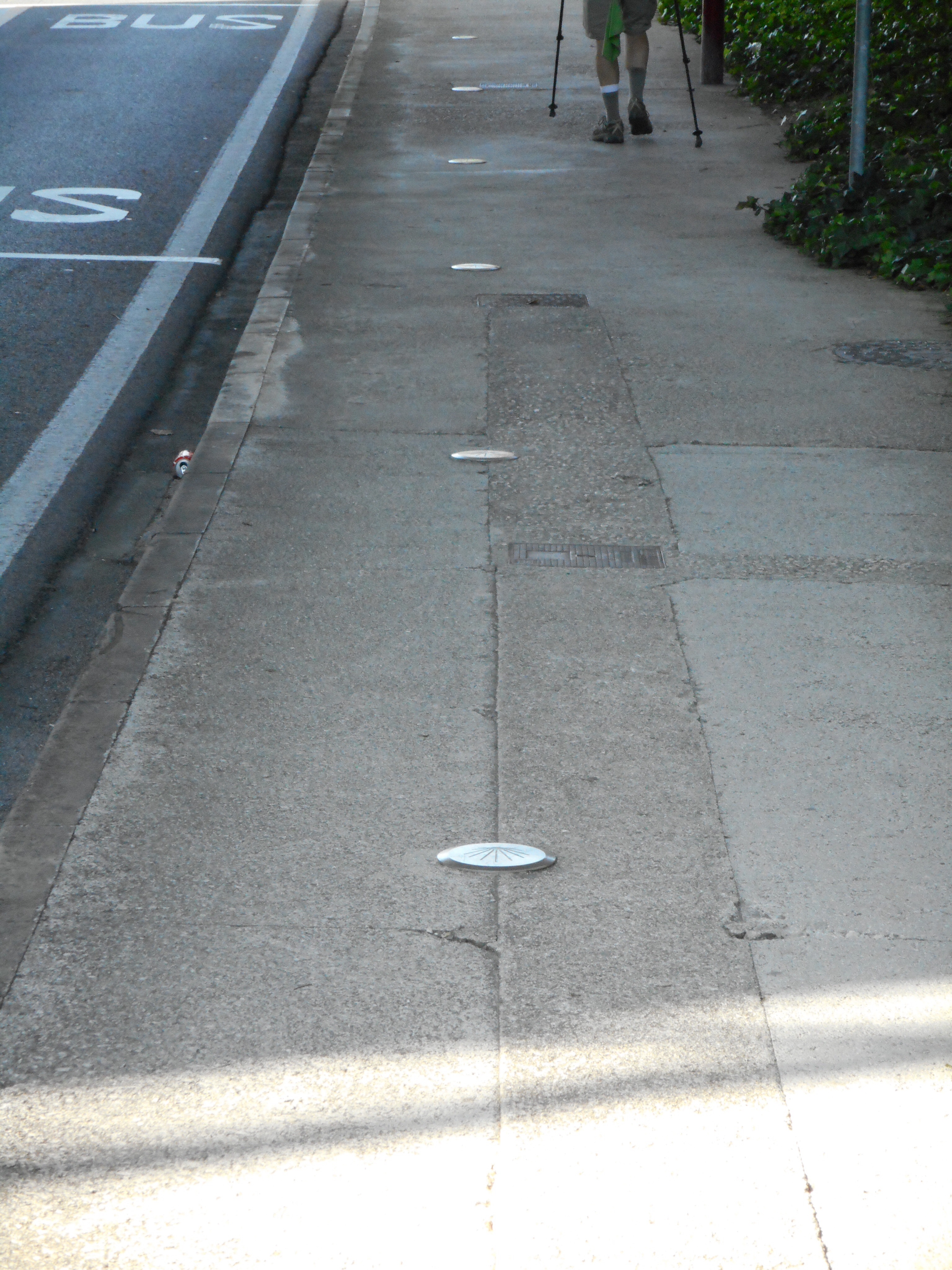
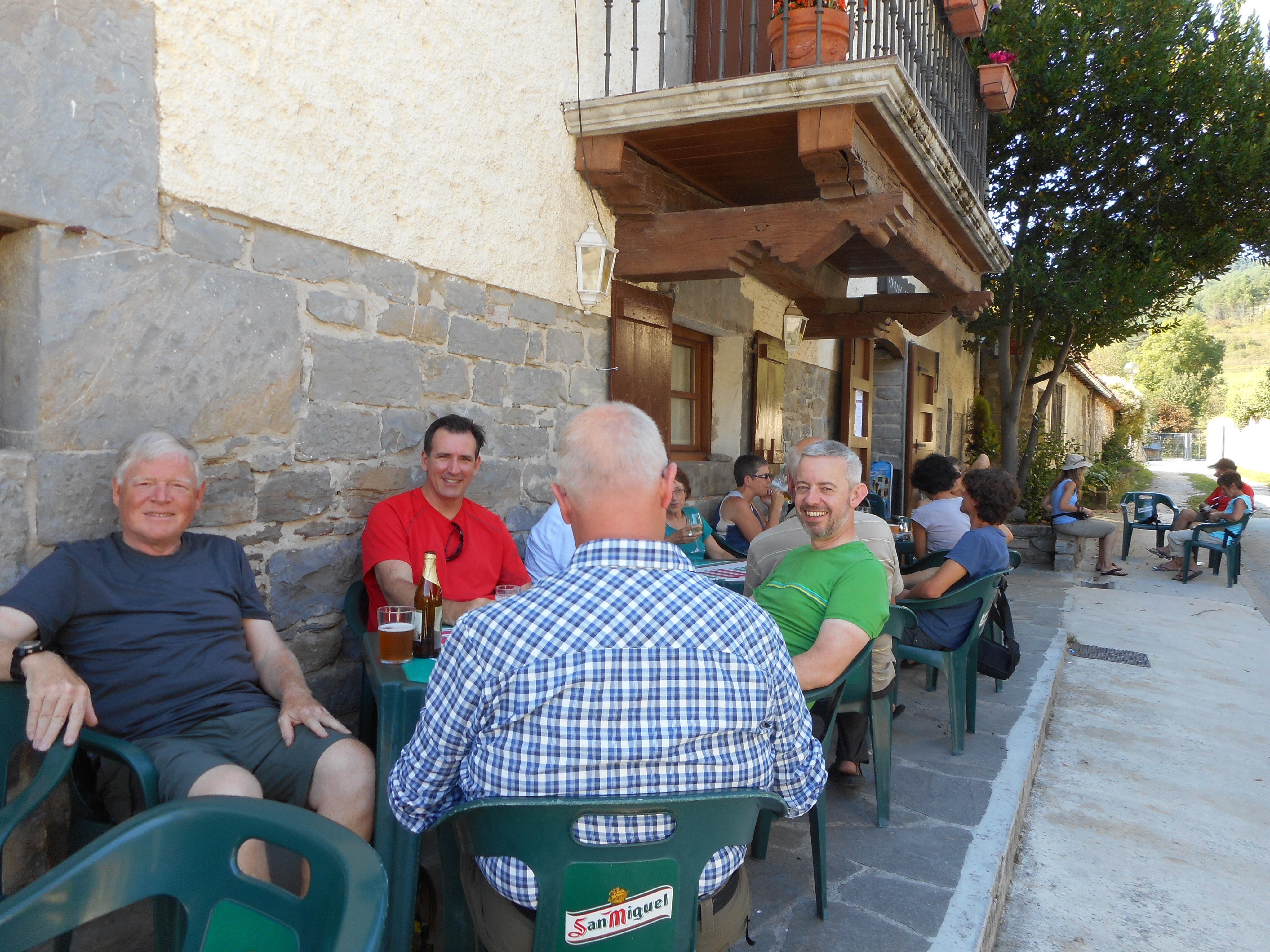
imagePamplona has many lovely, well-tended parks and the people were very friendly. Many greeted us with “Buen Camino” as we passed or indicated the path of the Camino when it wasn’t so obvious and when we may have looked a bit confused. Overall, the route through Pamplona was very well marked, even though we had been cautioned that you could easily get lost if you didn’t pay attention to the signs. We came to believe that you would have to work at it to get lost! In addition to the usual signs, markers, and painted yellow arrows, there were metal scallop shells embedded in the sidewalk about every 5 meters or so throughout the city. Very easy to follow.

On the way out of town we walked through the campus of the University of Navarre. It was the first day of the new school session and the campus was busy, but we were able to obtain a stamp for our credencial at the administrative building marking our visit. For the next couple of kilometers there was no shade and the sun beat down on us without pity. Thankfully, Cizur Menor was not far away.

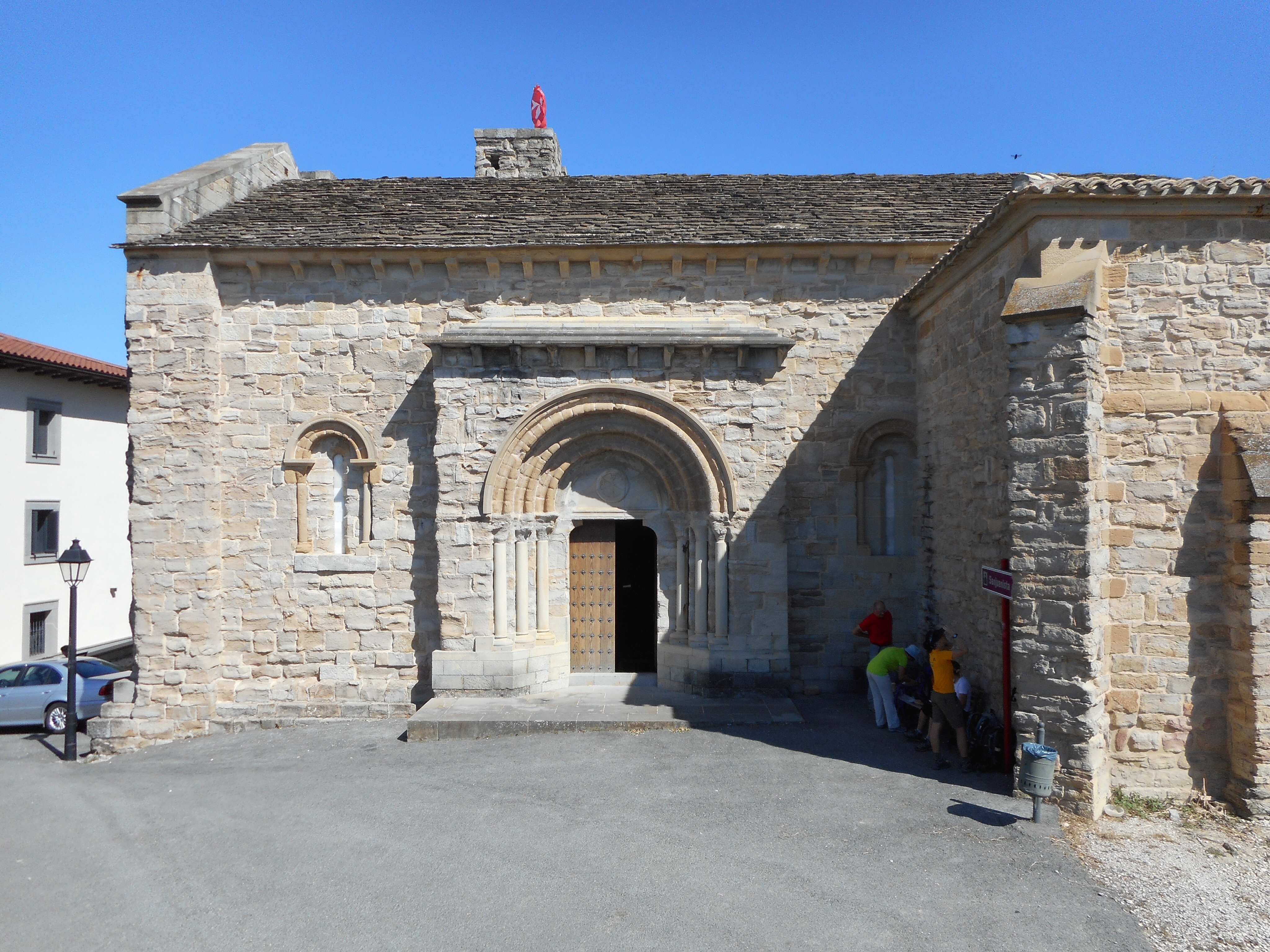
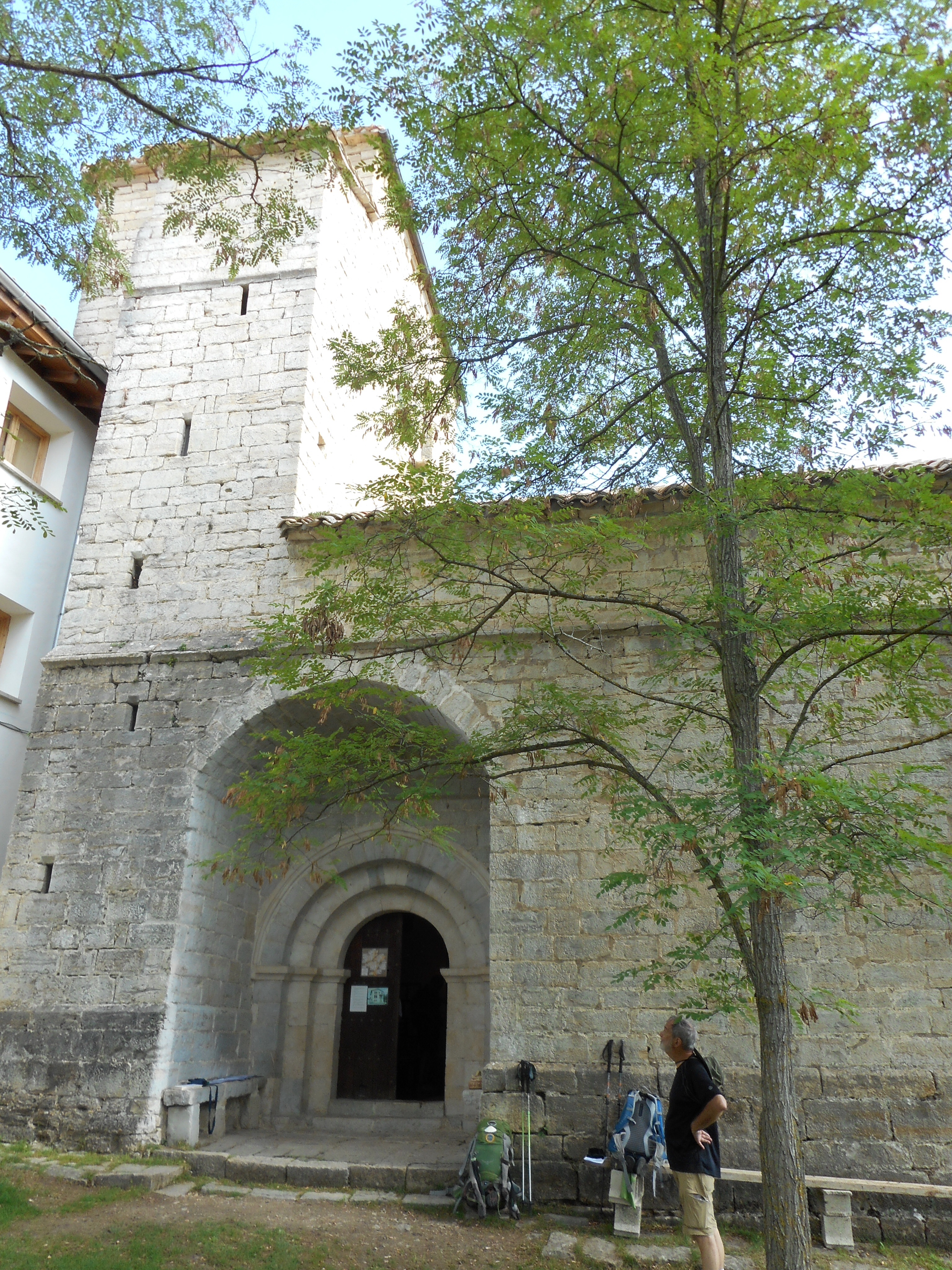
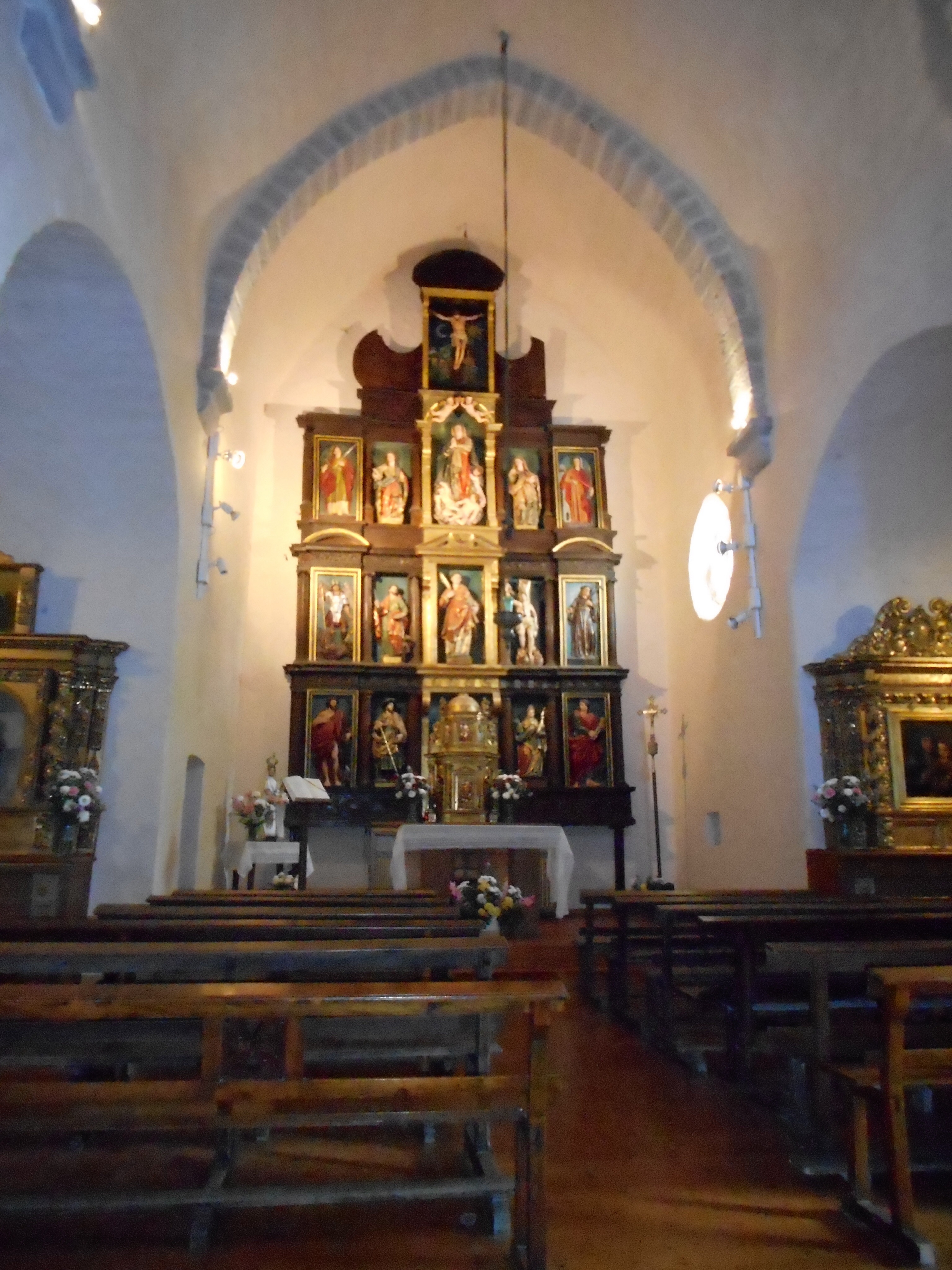
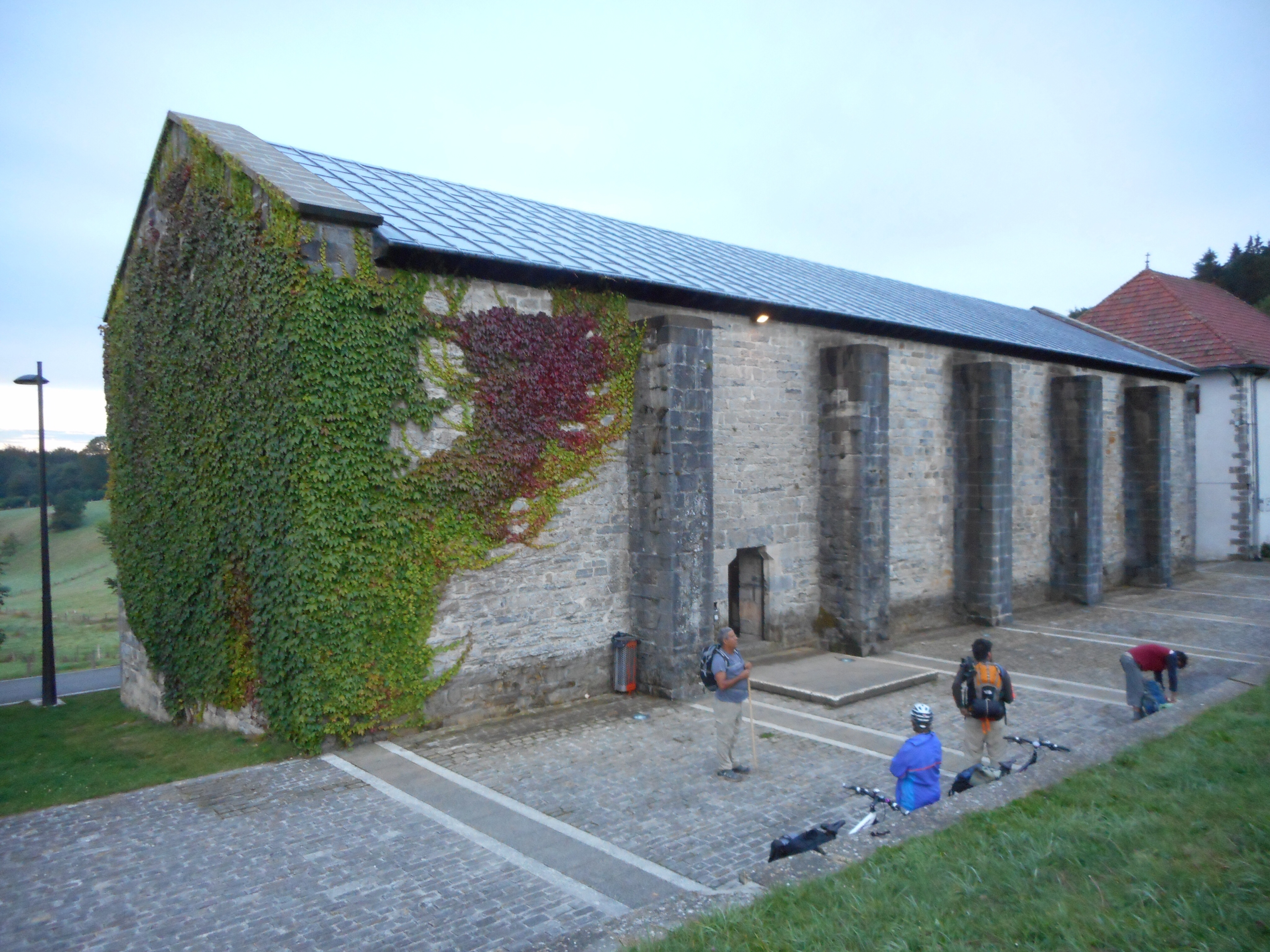
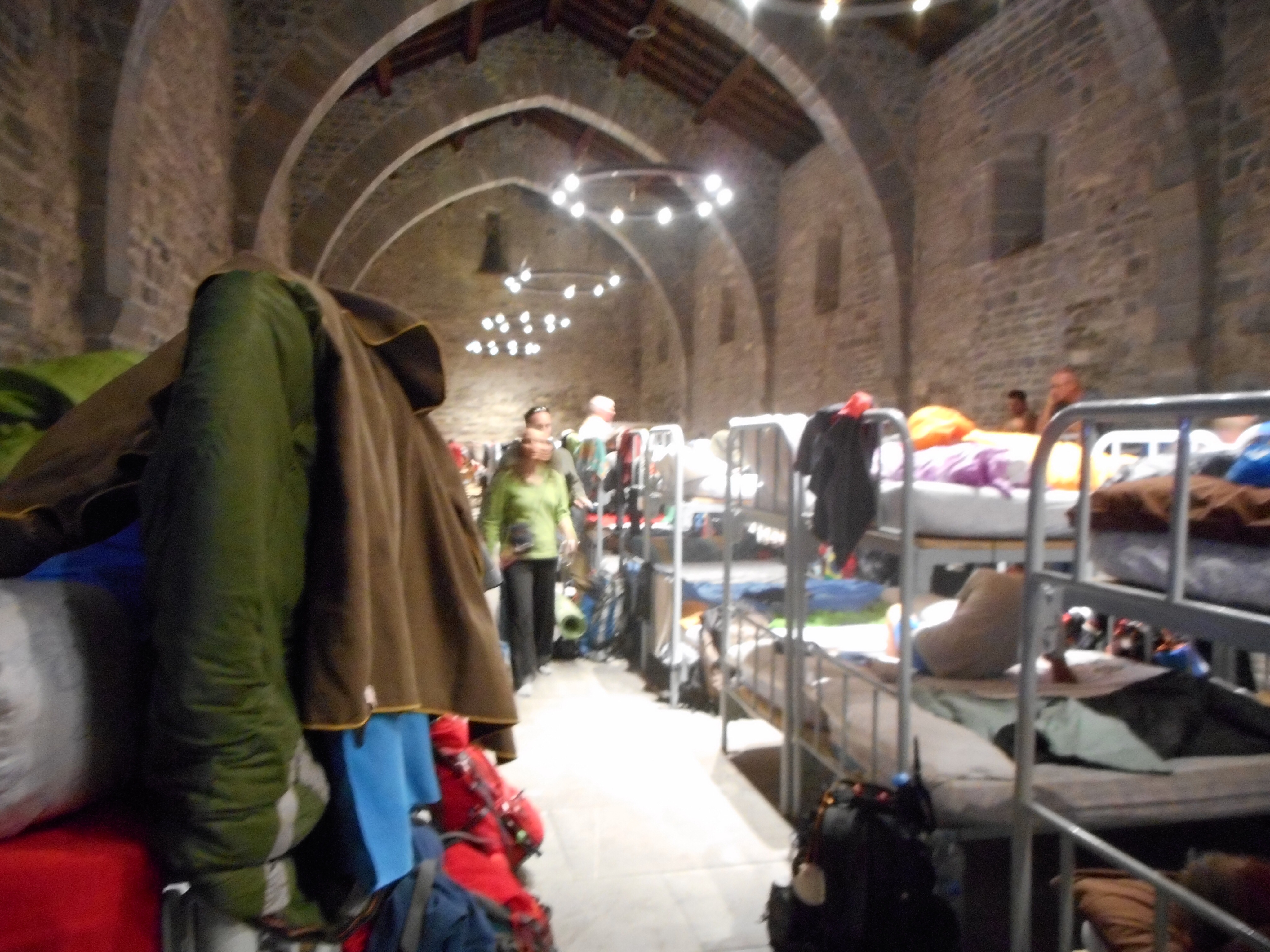
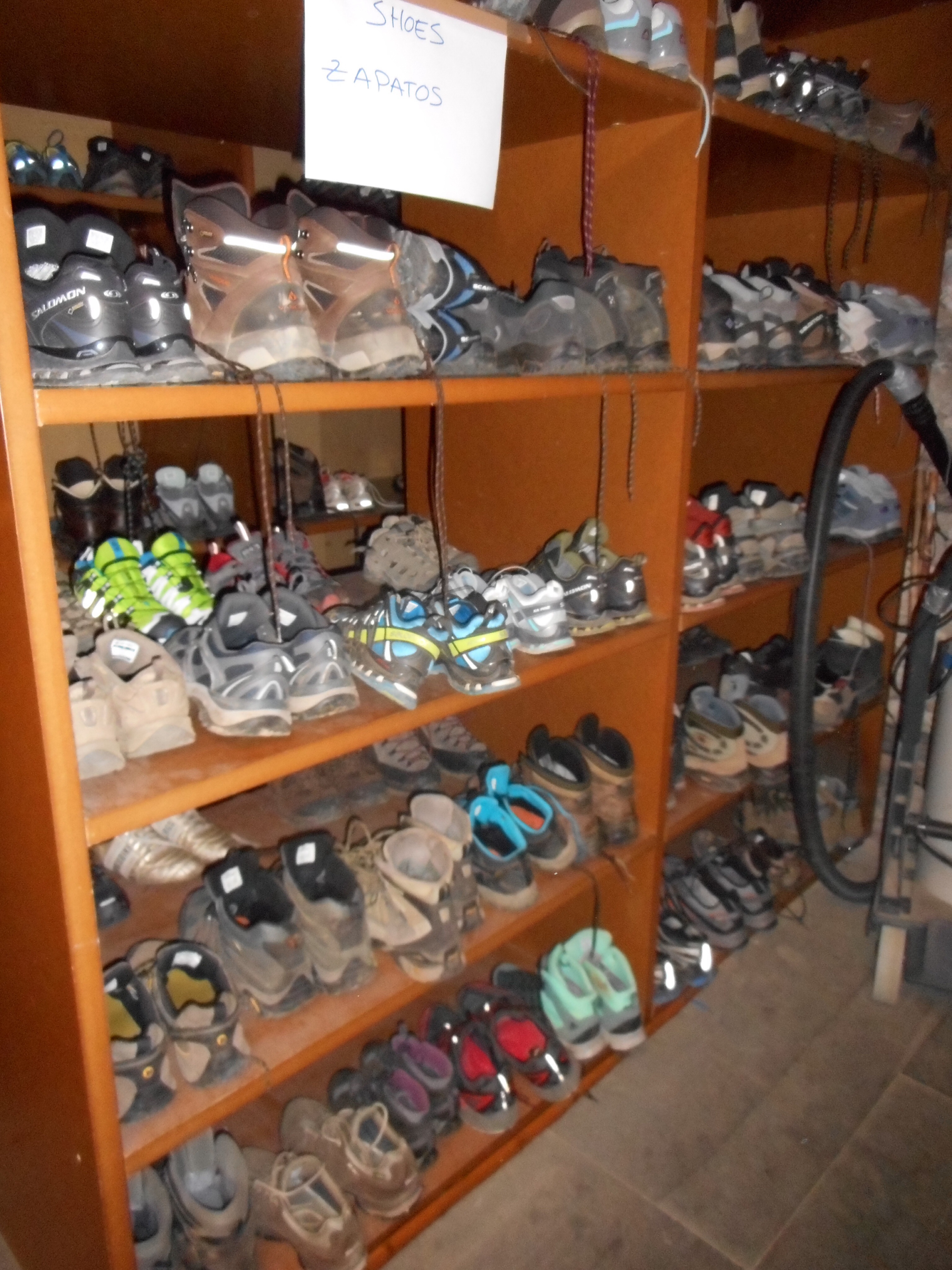
We are spending the night at an albergue operated by the Knights of St. John of Malta. We were so pleased with our stay in Arre and the care we received from Brother Domingo that are now going out of our way to stay only at albergues run by church-associated organizations, if possible. We are avoiding the noisy, crowded municipal albergues as much as possible. Brother Pedro took great care of us and made us feel abundantly welcome. The brothers worship in a venerable, old church opposite the albergue.

image
image
Tomorrow our goal is to reach Puente la Riena (Queen’s Bridge), about 12 miles down the Camino. More then.

¡Buen Camino!

Posted in Uncategorized | Leave a comment

A Guest Posting from Clint…

Bob has graciously consented to let me speak to you on his blog, and I would like to talk about how we have come to see for ourselves how the Camino serves as a metaphor for life. Life includes loss, and it seems people who walk the Camino are always loosing things. We leave stuff in the bathrooms when we leave an albergue, we leave stuff in the bars and restaurants where we have to eat, stuff falls out of our mochillas (backpacks) because they are always overloaded. Quite unexpectedly, though, I had lost nothing until yesterday, and I had taken smug comfort in that fact. After all, since we have to carry everything, we don’t carry duplicates of anything.

My good fortune ended when I discovered, as we were leaving a roadside breakfast stop, that I no longer had my sunglasses. They had been around my neck when we left Larrasoana before dawn, but they had vanished during our morning walk. Our thorough search was in vain; they were gone, and I had to begin dealing with my grief.

We resumed our walk and shortly came upon a XIII century church (open!) and went in to pray and read morning prayer together. Still seeking to console myself for my loss, I prayed to be released from my attachment. We finally returned to our mochillas outside on the ground where we had left them and I was stunned by a minor miracle: there, hanging on my backpack, were my sunglasses. I choose to believe in grace as a force in my life, and I choose to attribute the grace in this event to Santiago (St. James), the object of our walk today, who historically looks after and cares for his peregrinos.

Buen Camino to all of you.

Clint

Posted in Uncategorized | 2 Comments

Arre (Day 4 on the Camino)

imageOur day began long before daybreak, around 6am, as alarm clocks began going off and pilgrims began stirring in hopes of getting an early start. Many of the pilgrims are starting their morning trek before the sun comes up (which happens around 7:15am), but we feel it’s a bit too precarious to hike in the dark. We also don’t want to miss any of the scenery. But, this way they are more assured of securing a bed in one of the more popular albergues down the trail, which seems to be one of their main priorities. One thing we all agree on is stopping mid-morning for a light breakfast, usually a sweet roll or Spanish tortilla and a cafe con leche. Often the trail side cafés become quite crowded with pilgrims.

One aspect of the Camino that we have grown to quickly appreciate is the opportunity to pass through and stay awhile in the many tiny, quiet villages and hamlets along the way. We have come to learn a bit more about how the local people live. These are places we would never otherwise have stopped in or even passed through. The major roads uniformly bypass these small places. And we are seeing this as a gem of a gift to the pilgrims.

imageMuch of the day the trail followed the river Arga and was nicely shaded. We passed our new friend, Araceli, who we met at dinner in Vizkarra, sitting in the shade beside the river. She had just made a short stop to remove her boots and cool her feet in the river. At another point we took a short, although very steep, detour to the hamlet of Zabaldika where the Iglesia de San Esteban (Church of St. Stephen), built in the 13th century, is located. The church is cared for by an order of nuns and we were warmly greeted by one. This was a very spiritual place and we took the time for Morning Prayer before moving on.

image
image

We also met a 70 year old British gentleman, named Ken, who comes from a small town located between Liverpool and Manchester, England. His accent was very strong – almost too hard to understand – but charming to listen to. He is hiking the Camino for the second time. We shared stories and he told us an interesting one about him and the Beatles. In the early sixties as the Beatles were just starting to become famous, he was told about this group that was playing at a small club in town called The Cavern. For whatever reason he did not go. Years later he came to realize that that night was the very last time the Beatles would play at The Cavern before going off to worldwide fame and he missed it!

We have decided to try and stop at smaller, preferably parochial (church associated) albergues from now on as much as possible. Not only are they generally smaller and much less crowded than the larger municipal albergues, the hosts are often monks or nuns who genuinely appreciate pilgrims and go out of their ways to make you feel comfortable and welcome. As an added plum, their facilities and grounds are often in ancient buildings with beautiful grounds.

imageTonight we chose to stay in the town of Trinadad de Arre at an albergue located behind the basilica church Convento de la Trinadad (Holy Spirit), operated by the Marist Brothers. Brother Domingo greeted us, gave us the grand tour (all in Spanish), and exuded a feeling of welcome. The albergue only has 34 beds and only about half were occupied. An albergue has existed here since the 11th century. We had planned on stopping in Pamplona for the night, but found this quieter place much more attractive.

This trip is so much different than the forms of travel I have ever experienced before. Rather than focusing on rapid movement, hotels, restaurants, trains, taxis, etc., this experience is the exact opposite as we focus more on nature, lack of time pressures, quietness, and a more communal lifestyle with the albergues and pilgrim dinners – a very nice change in outlook.

image
We are still not sure exactly what we will do tomorrow. We will probably do a bit of sightseeing in Pamplona (the first big city we have come to on the Camino), but then may go on from there a bit, attempting to escape the hustle and bustle of the city for a more rural and pastoral location. We’re still a day ahead of schedule and have a scheduled rest day coming up (which we may or may not observe). We’re just going to play it by ear in the spirit of the Camino.

Posted in Uncategorized | Leave a comment

Larrasoana (Day 3 on the Camino)

Our weather for the past couple of days has been very good, although a bit warm and slightly humid. The worst part is that by noon or early afternoon the sun is beating down, you end up sweating a lot, and frequent stops and water breaks are required.

This reminds me that I am beginning to discover certain items of equipment that are pretty much essential, including items I had initially felt were probably not necessary or that I had never used before. The first is a water bladder/reservoir/Camelback. I had originally planned to simply carry plastic water bottles which I could refill as we walked through towns and villages. I didn’t want to carry the weight of 2 to 2-1/2 liters of water. But, at the last minute I was convinced to buy a water bladder. This has become a very valuable acquisition. I realized I would be carrying the weight of the water anyway in the plastic bottles. Plus, with the bladder I only fill up once a day and can take a drink through the plastic drinking tube without having to stop walking or fiddle around with water bottles – a much better arrangement.

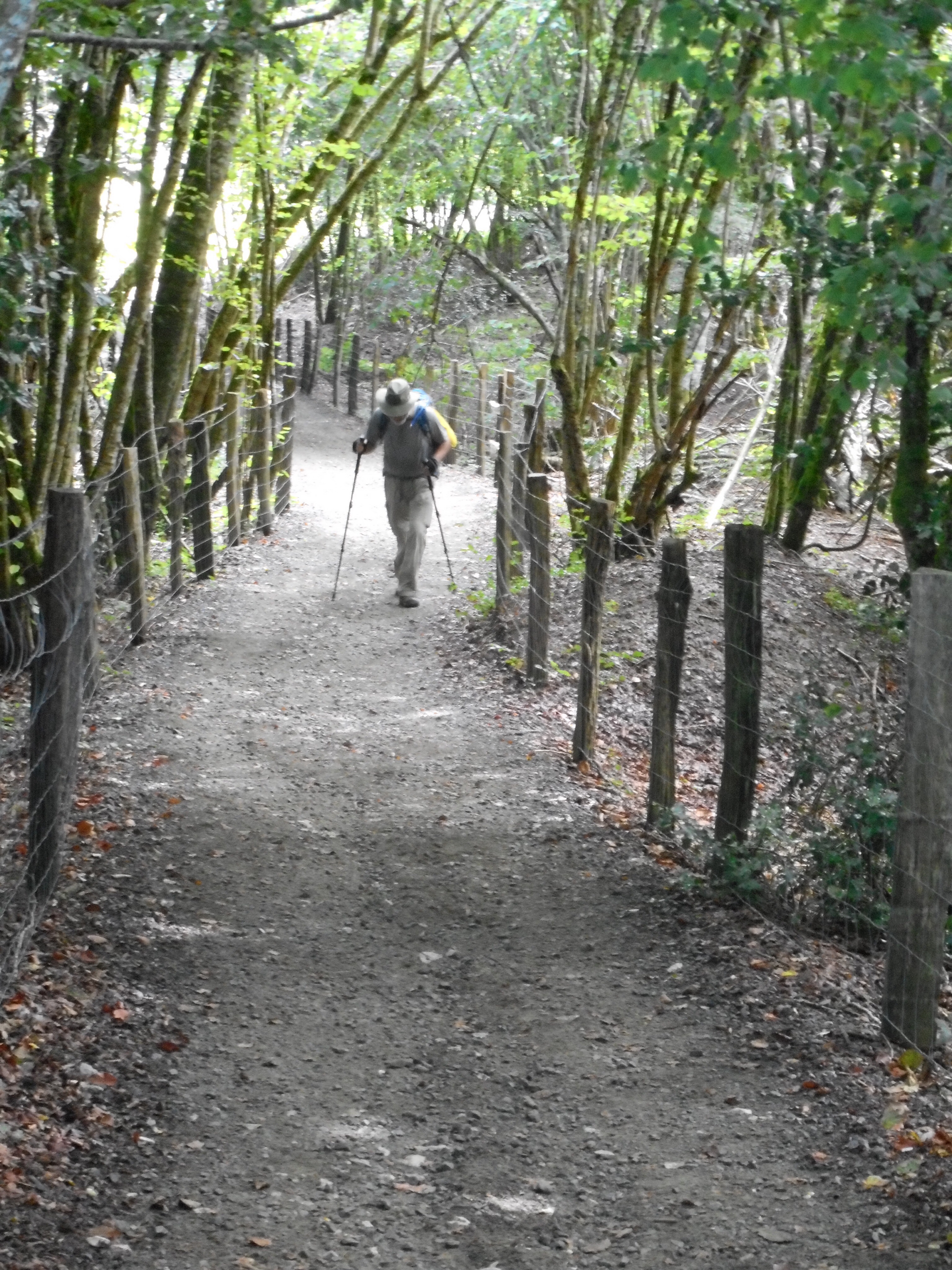
The other items of essential equipment are trekking poles (walking sticks). I had never used these, even during my somewhat limited training hikes while still in the States. But they have proved to be a lifesaver. They act as an extra set of legs and are very helpful in maintaining your balance – especially with the 24 pounds of backpack on your body. And they are also remarkably effective in easing uphill hiking, since your upper body muscles, working through the walking sticks, can now provide some additional assistance to your leg muscles. Anyone contemplating their own Camino should make sure they use these.

A third item that I have found very helpful during these first few days has been Ibuprophen. Taking a few pills at the end of the day helps to ease the aches and pains of the over-stressed muscles you didn’t even realize you had.

Today, we continued on from Vizkarret to our goal of Larrasoana. Even though there were still some ups and downs, the terrain has begun to flatten out a bit. For a long stretch in this region the Camino has begun following the Rio Arga river. The sound of the babbling water is soothing as we walk along.

You are really never alone on the Camino, and we are enjoying our conversations with others on the trail or in the evenings at the albergues. Often the walking conversations only last a short while as different walking paces come into play. But the pilgrims we are meeting are all very warm, friendly, and eager to talk. We are a band of brothers and sisters, all in the same situation. We are meeting people from many nationalities – many from the US and Canada as well as from Spain, France, Germany, and beyond. Although it helps to have at least a smattering of foreign language proficiency, the lingua franca on the Camino is English.

Attila from Hungary/Germany

Attila from Hungary/Germany

We met a 25 year old engineering student named Attila who walked with us for awhile. He was born in Hungary but is now living in Germany. We have begun referring to him as Attila the Hun….garian. We talked about alternative sources of energy, car design, and a few other topics that you might not think would be common on the Camino. But, after we arrived in Larrasoana Attila chose to continue on to a further destination. So we may never see him again. But, we did enjoy his company for awhile. He needed to keep moving since he has to return to Germany soon to start his next round of engineering classes.

imageAfter arriving in Larrasoana we checked into the municipal albergue (only 8 euros) and got settled in. The daily routine we are falling into involves a hot (hopefully) shower as soon as possible, followed by some time doing laundry. The sweat-soaked clothes you have worn for the day must be washed by hand and hung out to dry. With these two chores done you can relax and think about walking around town and having dinner. Before dinner tonight, we had a couple of beers at the only bar/cafe in town – again, having engaging conversations with our fellow pilgrims from Ireland, Holland, Australia, and beyond. The Pilgrim menu tonight (for only 12 euros) consisted of the wonderful local specialty of garlic soup (which really tasted much better than it might sound), a delicious beef stew, and an ice cream bar for dessert. One can really get used to this relaxed lifestyle.

The Larrasoana albergue.

The Larrasoana albergue.

imageOne of our drinking partners had a very interesting story related to his pilgrim credencial. This guy was from Ireland and he showed us that the first imprint (sello) in his credencial was from the Guinness Brewery in Dublin! And, while we found that amusing, he explained that there is a very valid historical reason for this. If you look at a Guinness label you will see the location of the brewery as St. James Gate – the same St. James we are going to visit in Santiago. This gate used to be in the medieval wall of the city of Dublin and was the starting point for Irish pilgrims on the Camino. So, today it is still traditional that Irish pilgrims begin their pilgrimage and get their first sello at the Guinness Brewery (and maybe have a pint or two). He also related an interesting factoid about Arthur Guinness and the brewery. When Guinness first opened the brewery he signed a 900 year lease on the property! I guess he was planning to stay around for awhile.

¡Buen Camino!

Posted in Uncategorized | Leave a comment

Vizkarret (Day 2 on the Camino)

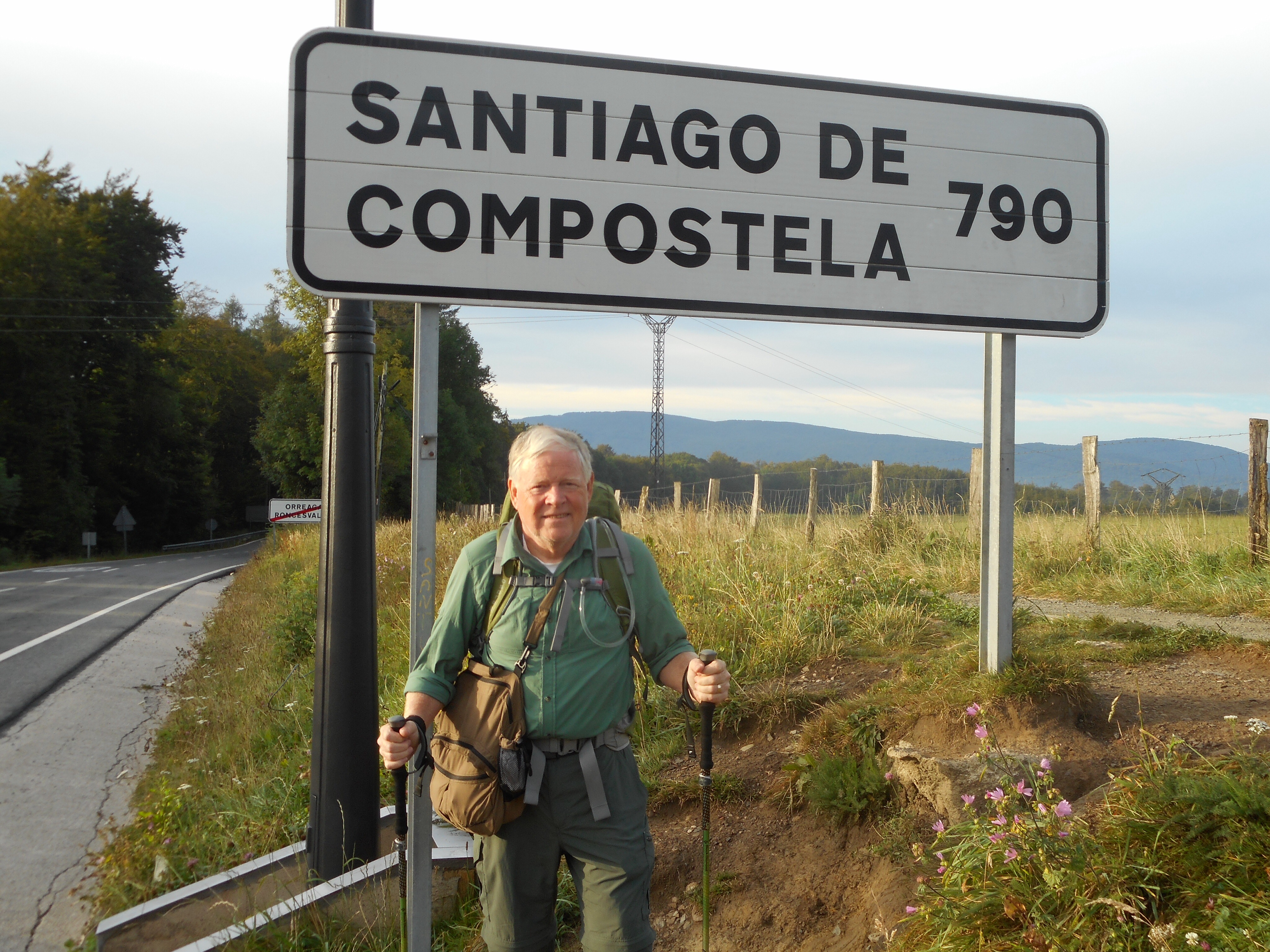
We're almost there.  Only 790 kilometers to go!

We’re almost there. Only 790 kilometers to go!

Well, after the ordeal of our first day, the next two days have been comparatively easy. Not too easy, but easy by comparison. Sleep has turned out to be a great restorative and our bodies healed enough overnight to allow us to experience two days of relative comfort. Not that it was all easy. We are still in the process of clearing away from the foothills or the Pyrenees mountains and we are still encountering fairly frequent uphill challenges. But overall, the hike the past two days has been noticeably easier than our first day. I was planning to combine these two days into one posting, but have decided that Day 3 will have its own posting – stay tuned.

We have come with our second important lesson learned from the Camino – On the Camino, as in life, every day there is some UP, and some days are all UP.

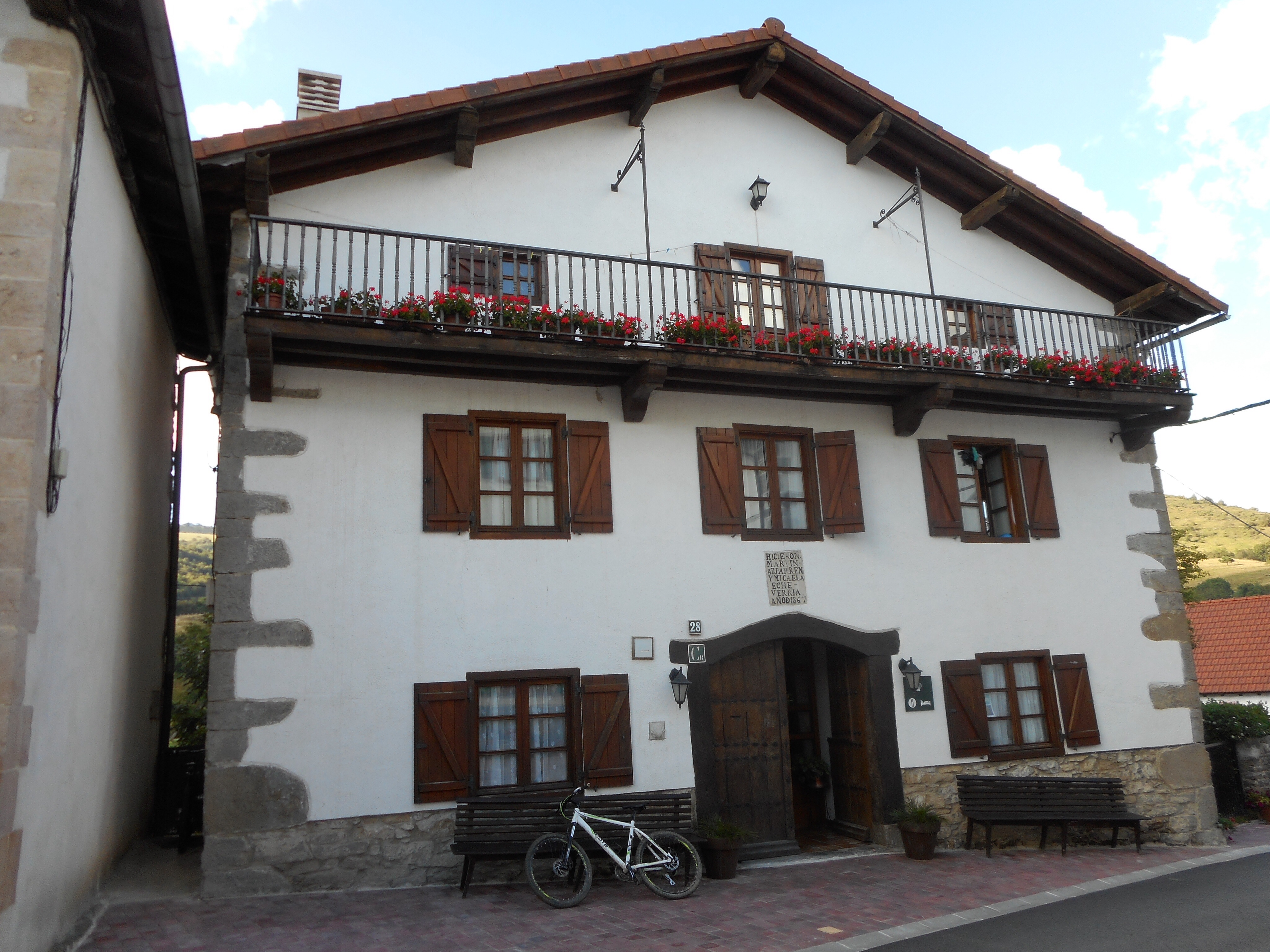
imageWe have now covered about 52km (I leave it to you to do the math to convert to miles: 1 mi = 1.6 km). Leaving Roncesvalles after a typical breakfast of toast with butter and jam plus cafe con leche (coffee with milk) we followed a nicely shaded woodland path. We entered the towns of Burguete where the Earnest Hemingway liked to stay. We were told that there was piano in the hotel that had his signature on it, but the proprietor was not amenable to letting in to see it. At least we tried! We also passed a church where many local “witches” were burned at the stake in the 16th century.

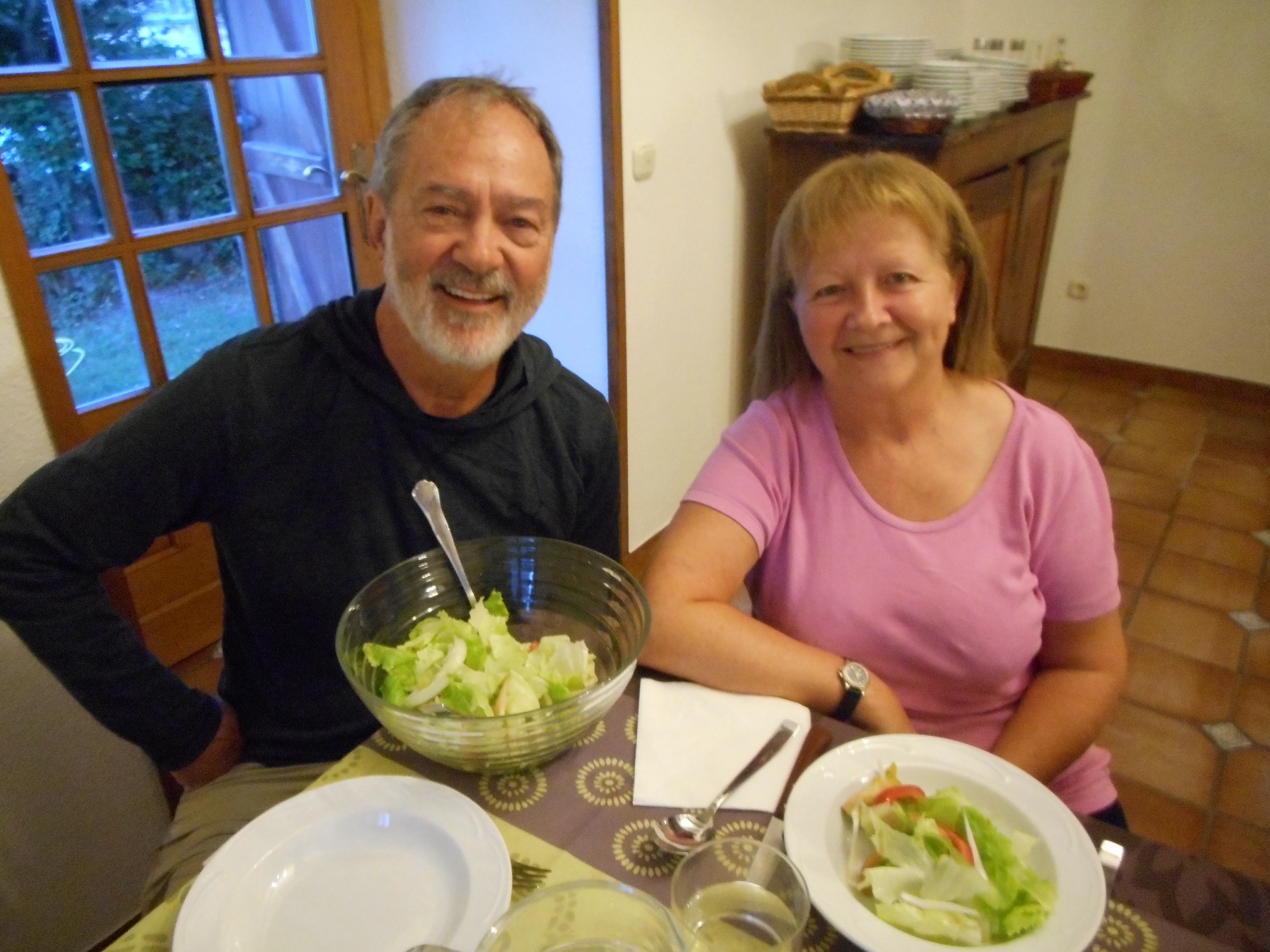
imageLeaving Burguete we made our way through delightful forested areas until we arrived at our destination for the evening – Vizkarret. We stayed at a “casa rural” (bed and breakfast) which was delightful – La Posada Nueva. It was a welcome relief to have only two of us sharing a road, rather than 120 of us – and we were served a delicious dinner that we shared with one other pilgrim by the mother of the house. It had the welcome and authentic taste of homemade food – green salad, green beans and potatoes, fried pork medallions, fried peppers, and melon for dessert. Our dining companion was a delightful lady from Barcelona named Araceli. She has become my first official “guest blogger”, contributing the following post (copied verbatim, here)…

Clint with Araceli.

Clint with Araceli.

“I am Araceli Relano, estoy enchanted a en comparatir cena con dos peregrinos de Estados Unidos”

I think she was pleased to be staying with two pilgrim from the States.

In the morning we were served breakfast and headed back out onto the Camino. We encountered a phenomenon I am calling “taxi-pseudo-pilgrims” this morning. While filling up our water reservoirs (also known as Camelbacks) for the day’s hike, a taxicab pulled up to the only small cafe in town and unloaded a group of women wearing light hiking shoes (more like running shoes) and carrying light day packs. They were a jovial group as they enjoyed their breakfast. Meanwhile their taxi left to deliver their luggage on to their next destination (probably a hotel rather than an albergue). We – the “real” pilgrims – shouldered up our backpacks and trudged on by them – looking piously down our noses at them. Shortly down the trail they rapidly overcame us. We bade them “Good morning” but refused to offer them a “Buen Camino.” Perhaps we’re taking this all a bit too seriously!

¡Buen Camino!

Posted in Uncategorized | Leave a comment

Roncesvalles (Day 1 on the Camino)

This will be a fairly long and somewhat rambling post since the events of the day were unlike anything Clint or I have ever experienced. Today we crossed the border into Spain where we will be for the remainder of our pilgrimage. Our major achievement for the day was to hike over the Pyrenees mountains. This was an arduous and extremely strenuous hike that took us almost 12 hours to complete! Most of the hike was uphill (over 10 hours of the hike) as we experienced an elevation change of 1100 meters (about 3300 feet) – the major challenge was associated with the 24 or so pounds of equipment and water we were each carrying and forcing our tired bodies to keep moving forward. By the time we reached our destination in Roncesvalles we were both whipped puppies to say the least.
The latest in Camino fashion.

The latest in Camino fashion.

The trail today was merciless. We started out by getting rained on. It wasn’t a lot of rain, but it was enough for us to deploy our rain gear. But the trail was the real challenge for the day. It just went up, and up, and up some more. As we would round a bend in the road and hope that it might level out a bit we we greeted by a new vista of the continually ascending trail – an endless slope, sometimes as steep as a 15% grade. It was akin to doing 10 hours on a stair-stepper machine at the gym!

I learned one of my first lessons on the Camino today. As far as the Camino is concerned, all pilgrims are created equal, regardless of age, sex, ethnicity, or anything else. No slack was given to any pilgrims on the trail today. We saw several who were having joint or foot problems. One husband even ended up carrying his and his wife’s backpacks for a stretch to give her a break.

To help me keep my body moving forward, I finally began focusing on “micro hikes” of 20-25 feet – just looking for some sort of marker on the road (a pothole, some scattered gravel, or another anomaly). I would keep walking forward with my head down until the mark was reached, then glance up briefly to identify the next mark. Looking too far forward just revealed this continuing, seemingly endless upward slope. It was not until we reached the crest of the final ridge of the range, about 10 hours after leaving St. Jean Pied de Port that we finally entered a downward portion hike. And in merciless fashion the Camino continued its assault on our bodies by presenting us with a sharply steep descent covered with a loose gravel for the next hour and a half.
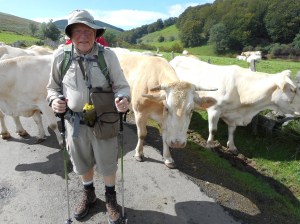
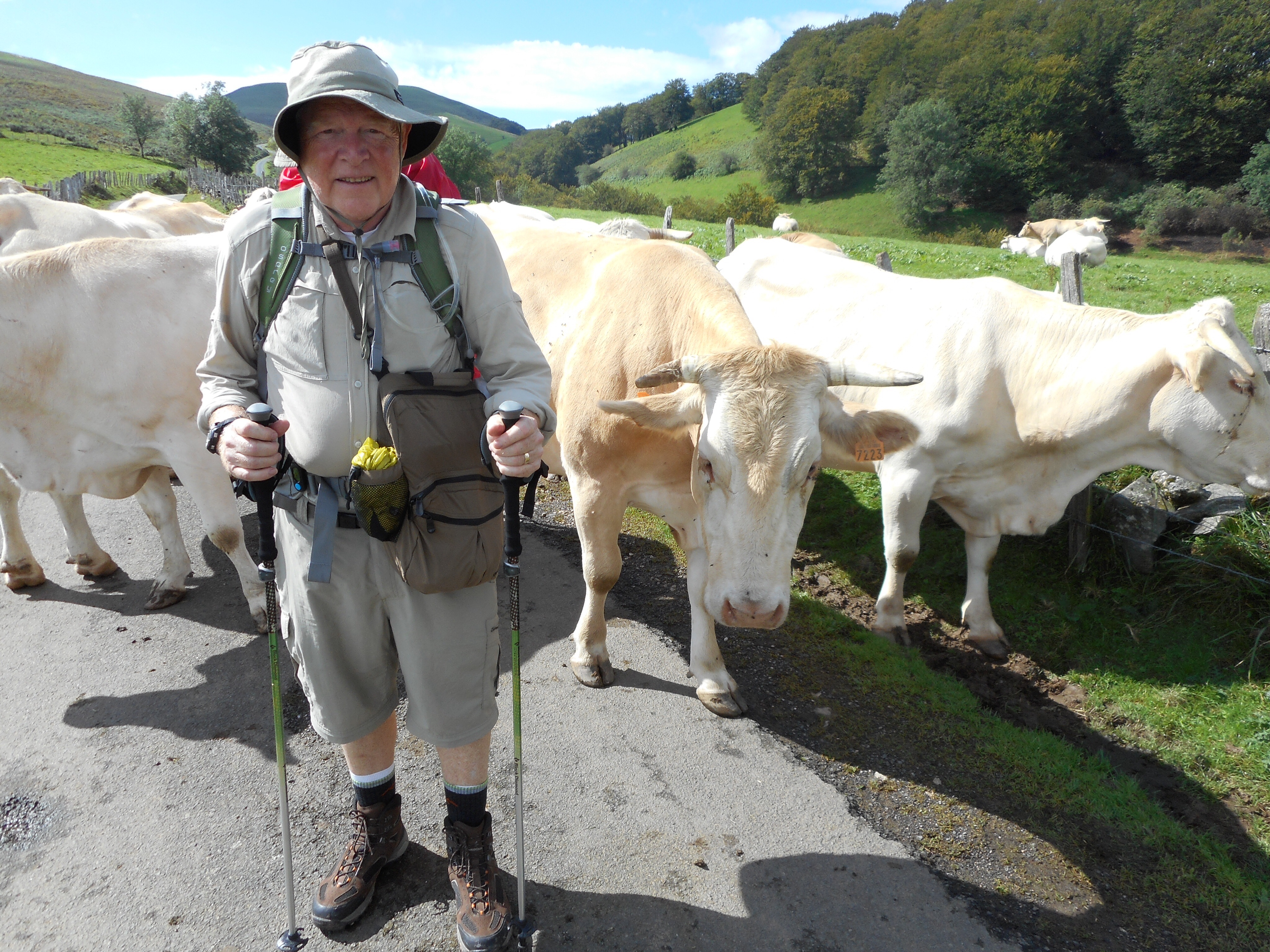
I'm the one on the left.

I’m the one on the left.

One remarkable compensation for this bruising hike was the fact that we were presented with the absolutely drop-dead beautiful scenery that is found in the Pyrenees mountains – grand in scope and breathtakingly magnificent. The grassy slopes hosted frequent herds of sheep cows and horses. The comforting sound of cowbells was almost constant. Clint referred to the cows as bucolic bovines. But, he also made the ironic observation that only the sheep and horses appeared to be wearing bells – not the cows! On occasion we had to thread our way between these peaceful animals, who were positioned right on the trail.

Our initial plan had been to spend the night at an albergue located about 5 miles outside of St. Jean, at a place called Orisson, planning to take it easy on our first day out. However, upon contacting the hostel we were informed that there was no more room at the inn. Word among fellow pilgrims was that this albergue is sold out three months in advance! Since there are no other albergues until you reach Roncesvalles, we were faced with the alternative requirement to hike all the way (over 16 miles) on our first day. We had planned to finish this section on Day 2 of our pilgrimage.

A second bit of compensation for the physical abuse we received on this day is that we had successfully completed this first, arduous test – a rite of passage, if you will – and were now authorized to exercise all associated bragging rights, which we have begun doing. We have also practiced looking down our noses (in a most Christian manner, of course) at those who chose to hike the easier, alternative, lowland route. The feeling, I have to admit, is sweet.

imageThe beautiful albergue in Roncesvalles is situated on the grounds of a medieval monastery. The site also serves as the Camino starting point for many Spanish pilgrims. Even though we were totally bedraggled as we trudged to our beds for the night – our clothes soaked with sweat, hair matted, backpacks akimbo – we had some slight pleasure as a bus load of new pilgrims arrived prior to starting their own pilgrimages on the next day. The looks we got as these mostly young people saw these two old guys who had been through the mill a few times were priceless. I’m certain we gave those new pilgrims pause to consider their own upcoming experiences on the Camino.

Taking off my backpack and shoes, followed by a hot shower, improved my outlook greatly. And a good night’s sleep (no problem sleeping this night at all!) also proved immensely therapeutic. We enjoyed a delightful “pilgrim’s dinner” at a local restuarant. For 9 Euros (about $13.00) our dinner consisted of a pasta course (rotini with tomato and sausage sauce), a pan-fried trout with French fries, a yogurt-based dessert, and all the red wine we could drink – a perfect meal for our condition.

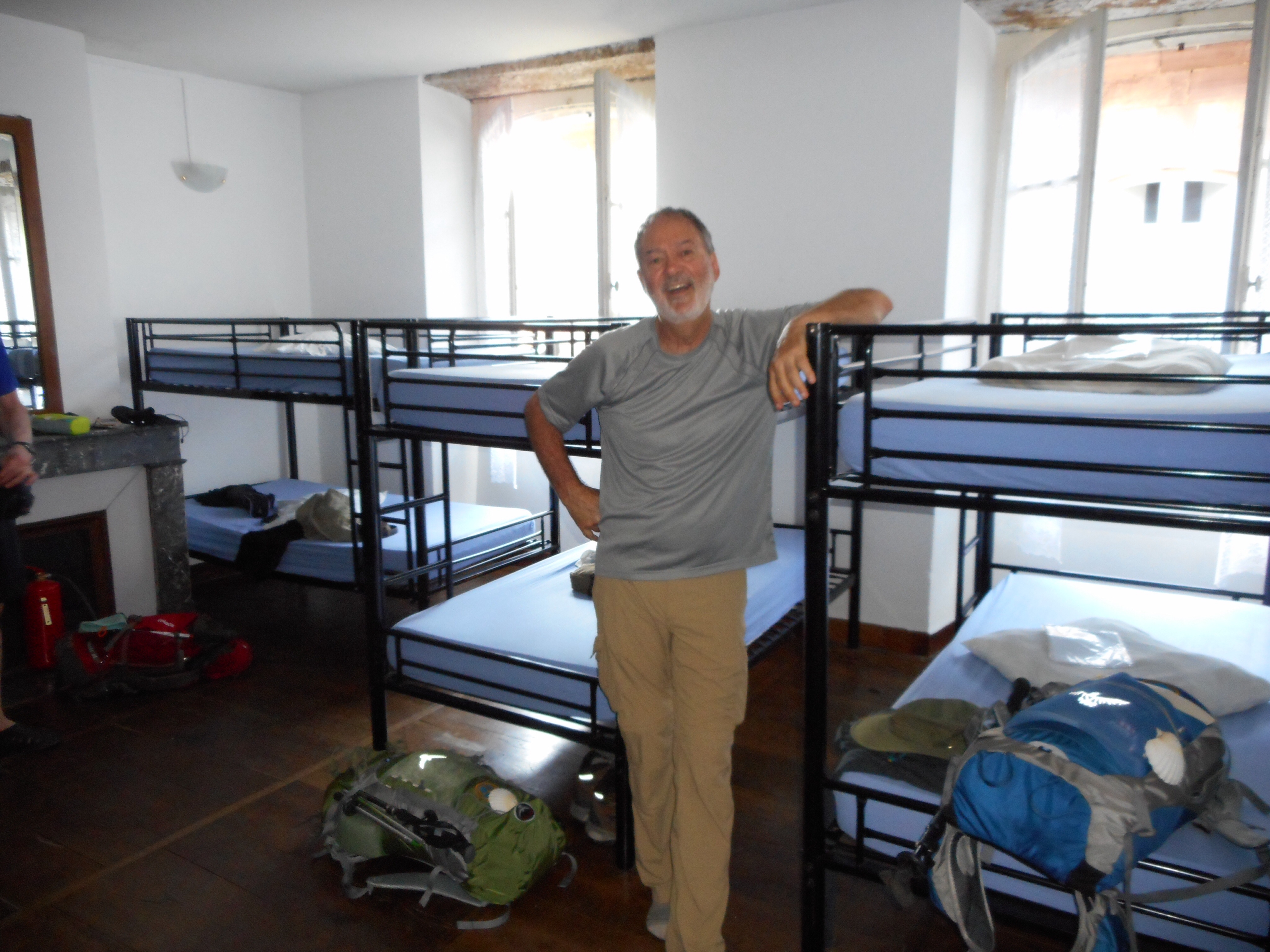
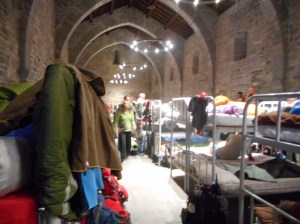
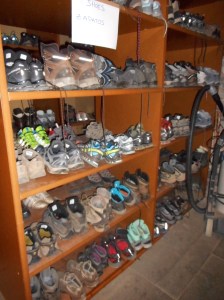
The albergue building, built in the 13th century, originally served as a hospital. Our bedroom was huge – about 30×120 feet. And, for the princely sum of 5 Euros we were privileged to sleep with 120 of our best friends. There was a night-long cacophony of snoring, coughs, and assorted passings of wind, but we slept like lambs.
image
image

Looking forward to continuing the pilgrimage tomorrow. The plan is to hike a leisurely 7 miles to the medieval hamlet of Vizkarret.

¡Buen Camino!

Posted in Uncategorized | 4 Comments

St. Jean Pied de Port

imageWe have arrived at our starting point for the Camino – St. Jean Pied de Port! Our adventure is about to begin in earnest. Clint and I have found each other and we are firmly ensconced in our first albergue for the night – Le Chemin Vers L’Etoile.

St. Jean is the ancient capital of the Basque region of Basque-Navarre. Due to its strategic location just below several mountain passes into Spain it was once a key military bastion. The monumental Citadel above the town remains standing as testament to the importance of the city. In fact, Pied de Port (or, previously, Pied de Portes) translates to “foot of the pass(es).” Fierce battles were fought between Spanish and French/Basque forces in past centuries in this area due to the strategic importance of the town. Basque culture and language are still in evidence throughout the region and the Basque people remain fiercely independent and proud of their heritage.

For centuries St. Jean Pied de Port has been the principal gateway to the Camino and the starting point for pilgrims from all over the world. We saw many pilgrims in town today. All were easily identifiable by the backpacks on their backs.

imageI began the morning quite early since the regional train from Bayonne to St. Jean left at 7:45am. At 7:30 the sky was just starting to lighten up. As far as I could tell, the 20 or 25 passengers on the train were all pilgrims, based on their luggage, which consisted solely of backpacks. I received my first “Buen Camino” greeting in the Bayonne train station. It was interesting that all of our equipment looked brand new. It will be even more interesting to see what it all looks like after a few weeks on the Camino. The topics of conversation all centered around Camino routes, equipment, and previous history on the Camino. There was a palpable feeling anticipation, expectation, excitement, and energy on the train.

Upon arriving in St. Jean I experienced an intense and overwhelming feeling of excitement at finally seeing first-hand this lovely medieval town that I had previously only seen in pictures. Everything is neat and tidy. The homes and buildings in town are very well-kept as were the homes in the villages we passed on our way here. We are deep in the French countryside, well off the usual tourist routes, and the landscape looks like a painting. I love it!

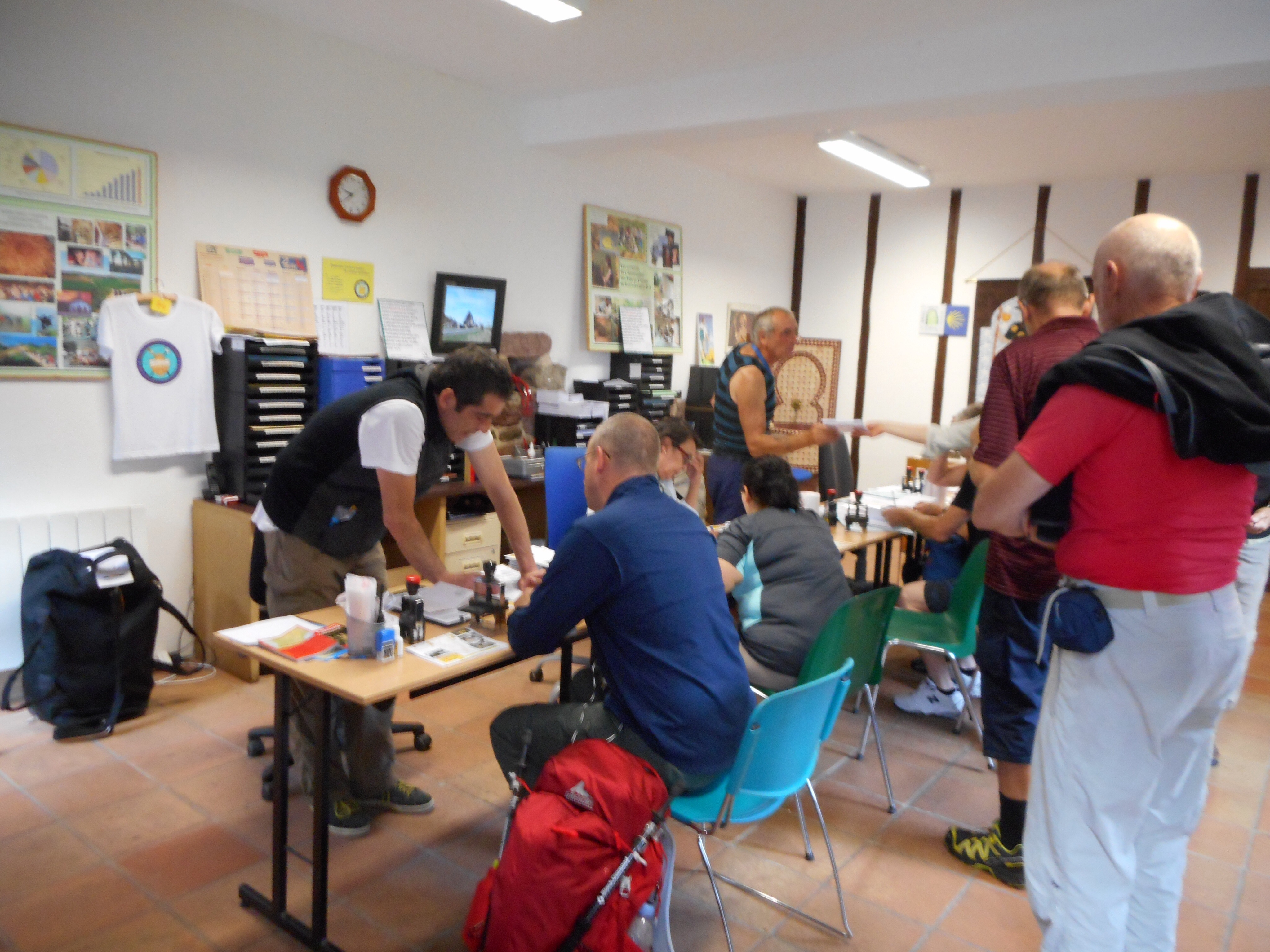
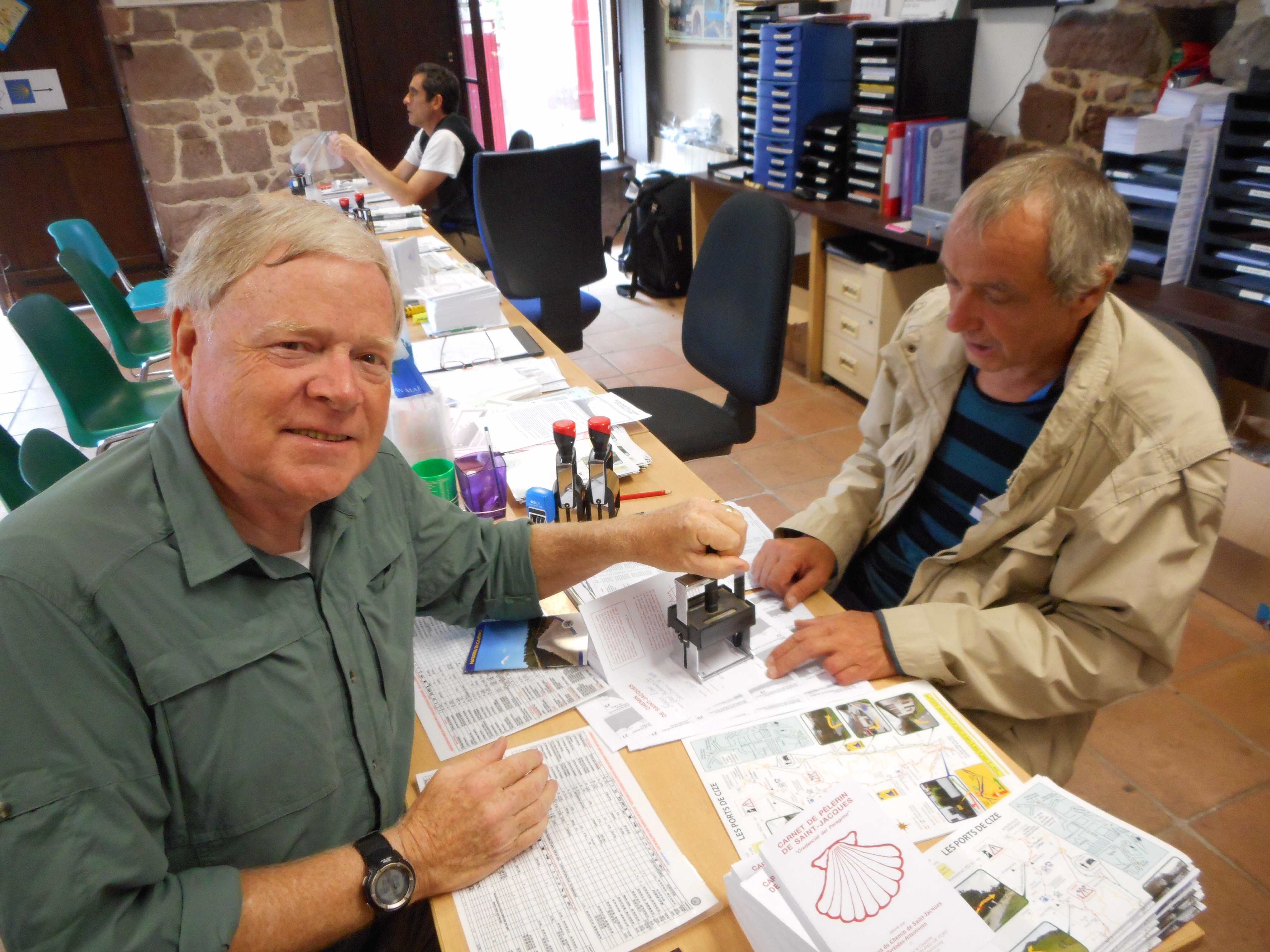
This morning, after visiting the Pilgrim Office and receiving my first official “sello” (rubber stamps documenting arrival at specific locations). (Clint just pointed out that we should have almost 50 or 60 similar stamps before we complete our pilgrimage.) We attended mass in the local parish church and were grateful recipients of a special pilgrims’ blessing from the parish priest after the service.
image
image

imageAfter some local sightseeing we checked into the albergue (actually, Clint had checked in when he arrived yesterday), and began participating in the daily routine of a peregrino – claiming a bed, taking a shower, and washing our clothes by hand. Next on the agenda is dinner being prepared by our hospitalero (albergue host). Then a good night’s sleep and our first Camino steps early tomorrow morning.

¡Buen Camino!

Posted in Uncategorized | 1 Comment